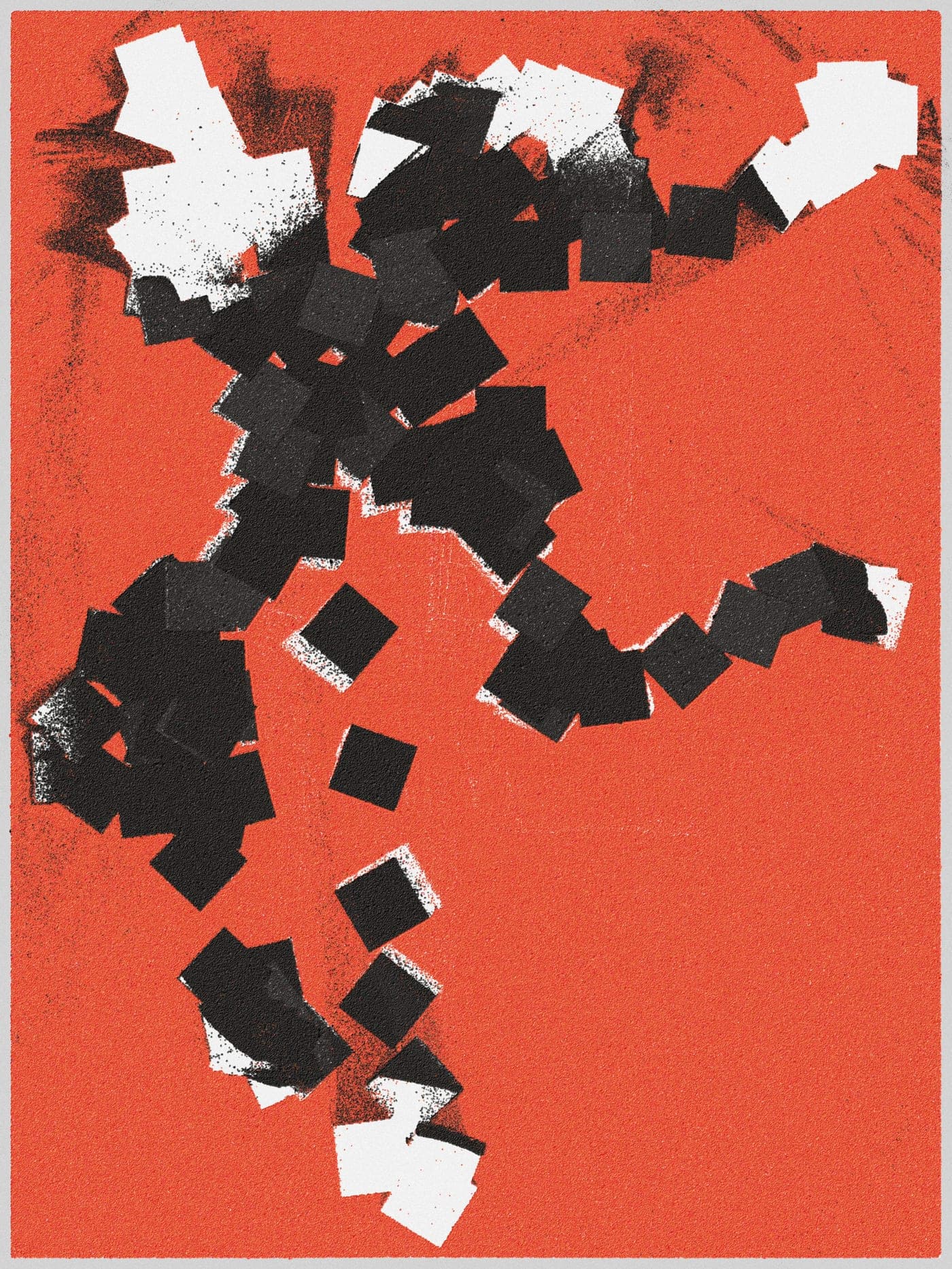
Graphite, Dust, Ash, Embers, Sand, Snow.
There are emotions attached to witnessing the aesthetic and form of these in the real world. One similarity connects them all, at their core each being comprised of tiny particles.
Drift is a journey into creatively expressing physical phenomena in a digital setting through the use of particle systems algorithmically. Coded within, an underlying simulation dictates the physics and drag of the particles; akin to wind blowing across sand or the crumbling of pencil‑tip as it comes into contact with paper.
The behavior of particles interacting with their environment entrances Paolo from the detail and patterns which emerge.
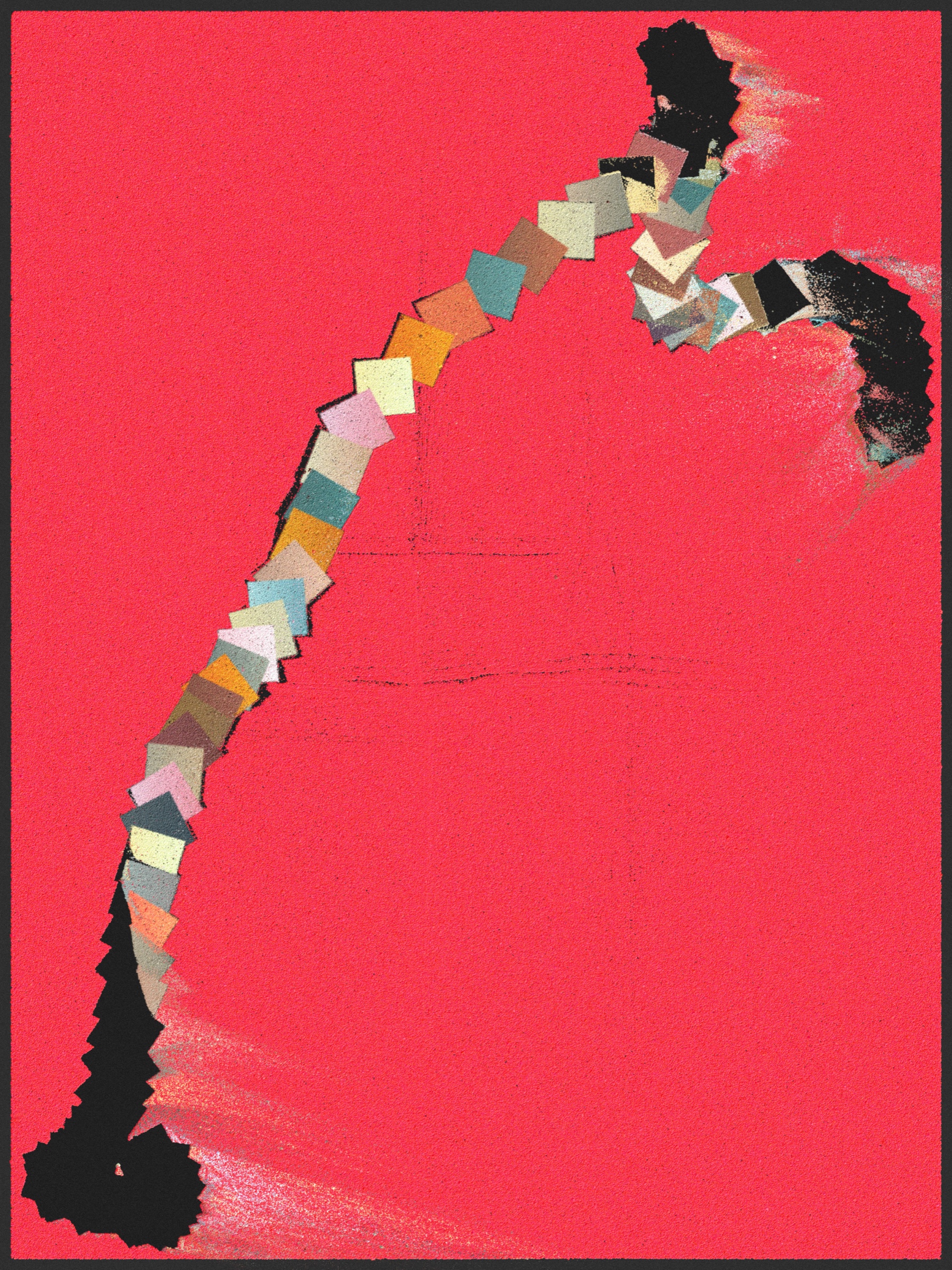
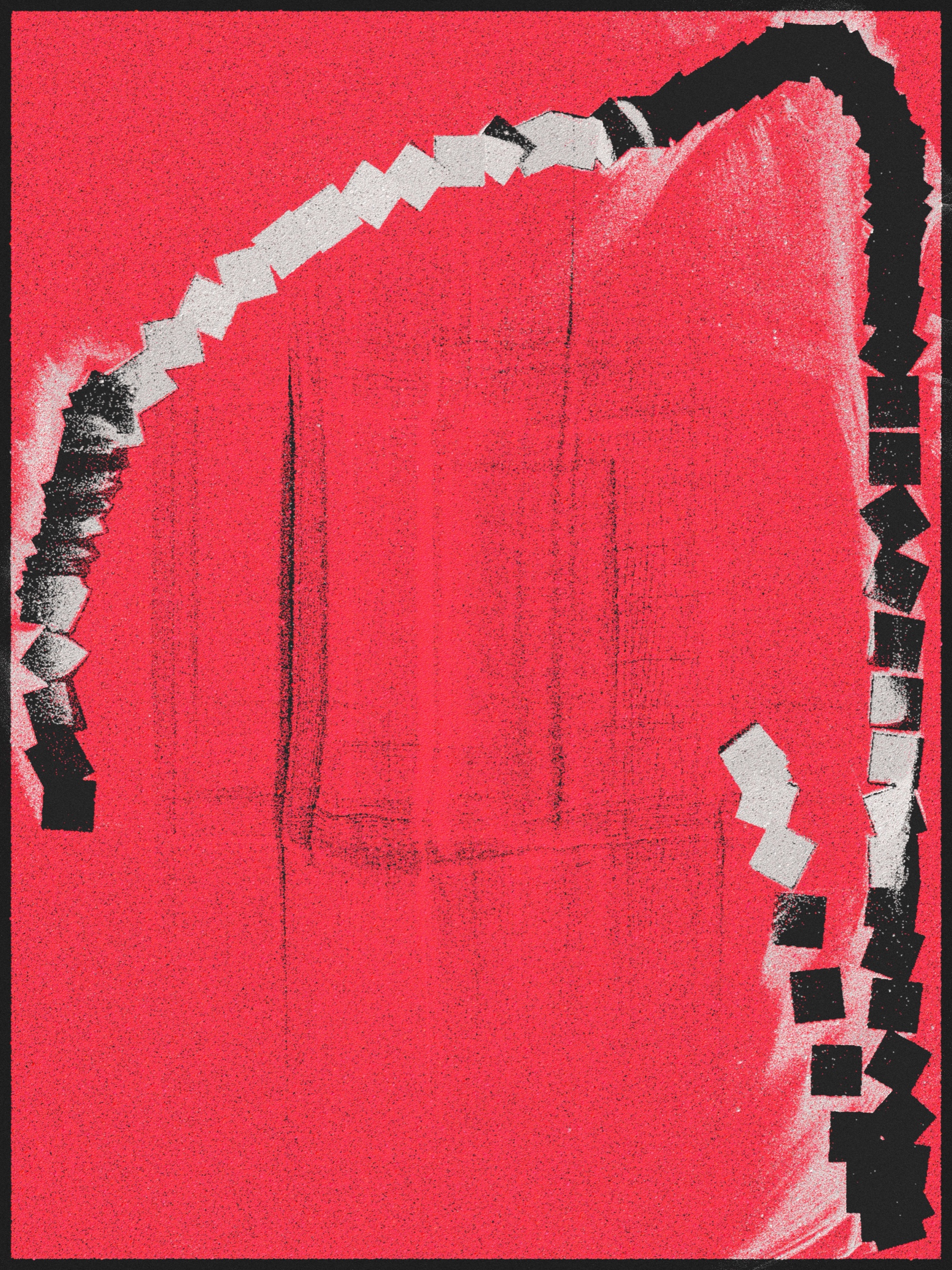
Within Drift memories of movement are caught and preserved on digital canvas. Upon viewing textures so intricate you can almost feel them through a screen, Paolo builds upon each scene through the use of rectangles, squares, and circles — at times depicted in a literal sense, others morphing and melting into one another. Drift expands in its varied focus of abstract shape composition and positioning alongside the use of bold colors. The empty space in each output holds equal weight, telling a story of the algorithm’s intended gestures and paths — creating a juxtaposition between silence and the jubilation of shapes coming together.
The rush of water over algae, the imprints of waves washing up on a beach, the carefree nature of a breeze on a Winter’s day — its invisible force animated to life by snow being lifted away and floating in specific directions; Drift encompasses the rhythm of life and beauty of existence all expressed through code.
Details
Particle systems have always held a special place in my heart. The inherent simplicity of each particle and the complexity of what emerges is a theme I have always enjoyed exploring.
With Drift, I continue this exploration and delve deeper into the intricacies of one such system, to see what emotions it can evoke.
Paolo Čerić
Paolo Čerić (b. 1990) is a Zagreb‑based artist and programmer. His interests have long existed between science and creative expression. After being introduced to generative art by his uncle Vlado, he found a practice that merged both. Working generatively allows him to combine systems, emotion, and observation through code. His early work focused on animation and the looping nature of the GIF format. Alongside generative work, he explores photography, 3D modeling, industrial design, and interactive installations. Notable projects include projection works for modern dance performances developed with the Zagreb Dance Center. As an ML engineer, his recent experiments investigate diffusion models as tools for meaning and visual interpretation. His work has been exhibited at D‑izložba in Zagreb and Perfekt Prints in Vienna.
Works Available
All 938 works remain viewable and collectable on Verse, with full provenance and trading history. For press and private enquiries, contact the curator directly.