The work begins with a standard rectangular framework that gradually slips out of alignment through a re-meshing process. Grids stretch, compress, and fold into dense spatial structures where repeated subdivision produces areas of unexpected tension. Certain compositions feel almost architectural at first glance, though the geometry never fully settles. The images seem to evolve by pushing the system past the point where its original structure can comfortably hold.
Beneath the surface, these fields operate as responsive environments. Small blinking walkers move through dense networks, tracing routes that shift continuously across the image. Wait timers determine when new destinations appear, producing the intermittent pulses visible throughout the compositions. Some regions become crowded and highly active, while others remain sparse or suspended. The movement occasionally recalls infrastructural traffic, circuit mapping, or colonies navigating through synthetic terrain, though no single element appears to direct the image outright.
The pieces carry traces of vector displays, terminal interfaces, and certain visual languages associated with 1970s science fiction. Depth emerges through luminous points, interference patterns, and shifting densities rather than realism. The use of Helvetica and Akzidenz-Grotesk reinforces that technical lineage without turning nostalgic. These references feel absorbed into the broader visual texture of contemporary computational culture, where older interface systems continue to echo through present-day image making.
What remains compelling is the instability itself. The grids never fully resolve into fixed structures. They continue reorganizing under pressure, held in a state that feels simultaneously controlled and provisional.
Split Logic is a collection of procedural terminal works built from , , , , and rule-based color. The series begins with layout as a kind of logic, dividing the frame into zones that hold fragments of data, , , and .
Across the works, motion is found through , directional noise, and that respond to various constraints within the algorithm. Some pieces feel like transit diagrams or stock tickers. Others resemble diagnostic screens or monitoring systems from an imagined machine. The information is partly legible and partly invented, sitting somewhere between data, interface, and decoration.
The series moves away from the paper-like texture of my earlier collections and toward a more digital surface. Its imperfections come from glow, blur, , compression, and instability. It suggests a functioning system designed for clarity, but still shaped by drift, interference, and human selection.
The pieces are meant to feel like screens from an unknown system that could have existed in a more advanced version of the 1980s, where modern computation is filtered through older display language.
Four seasons + one practice
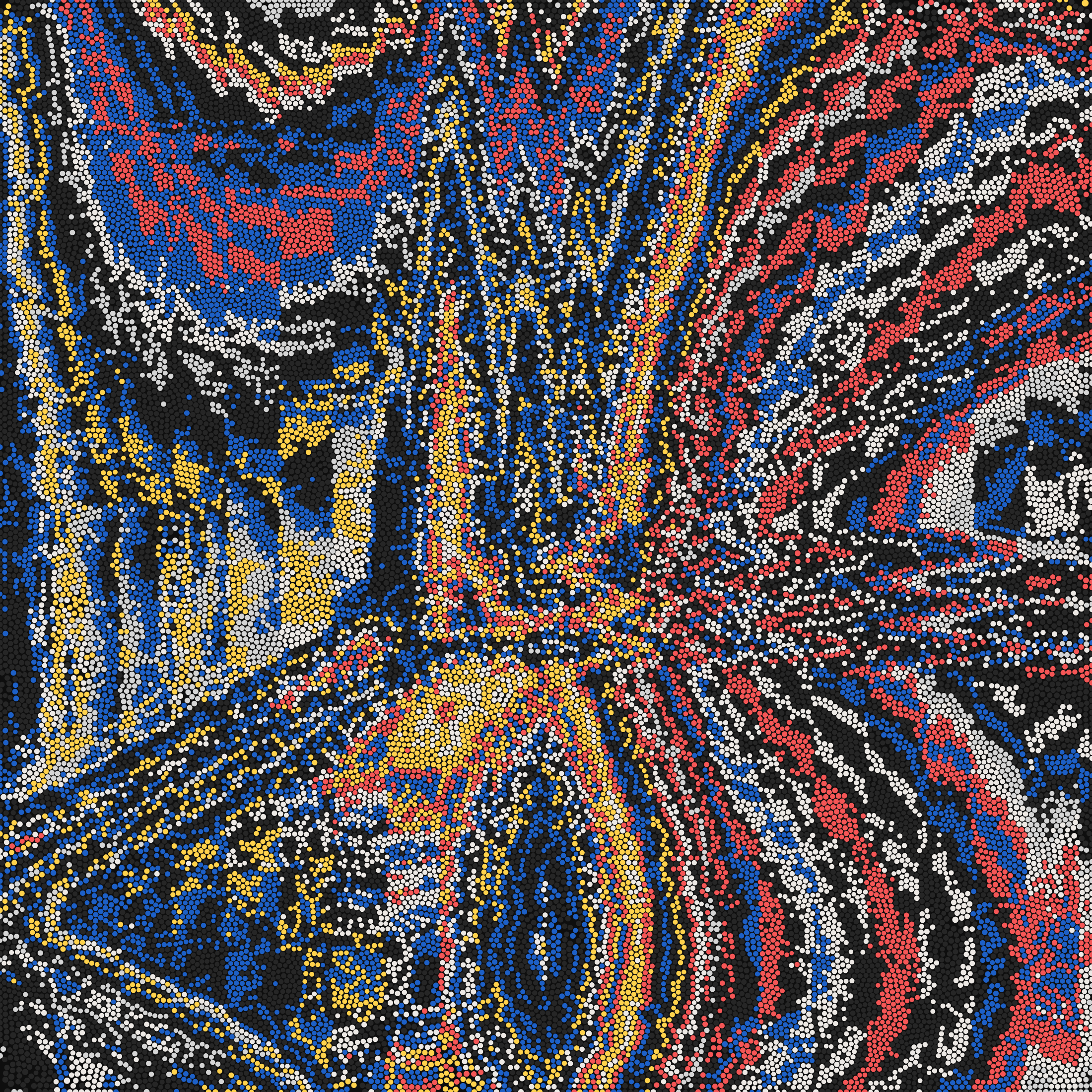
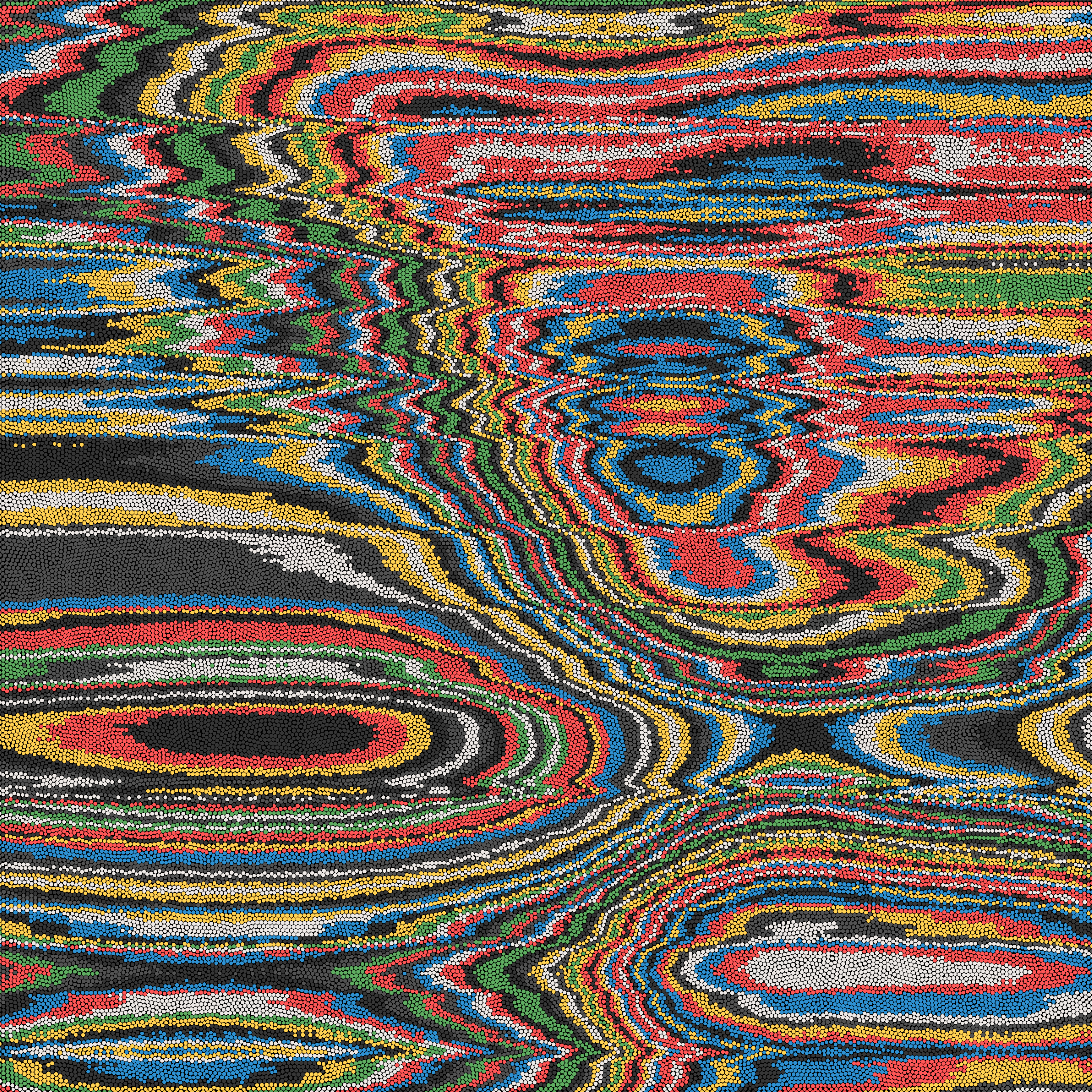
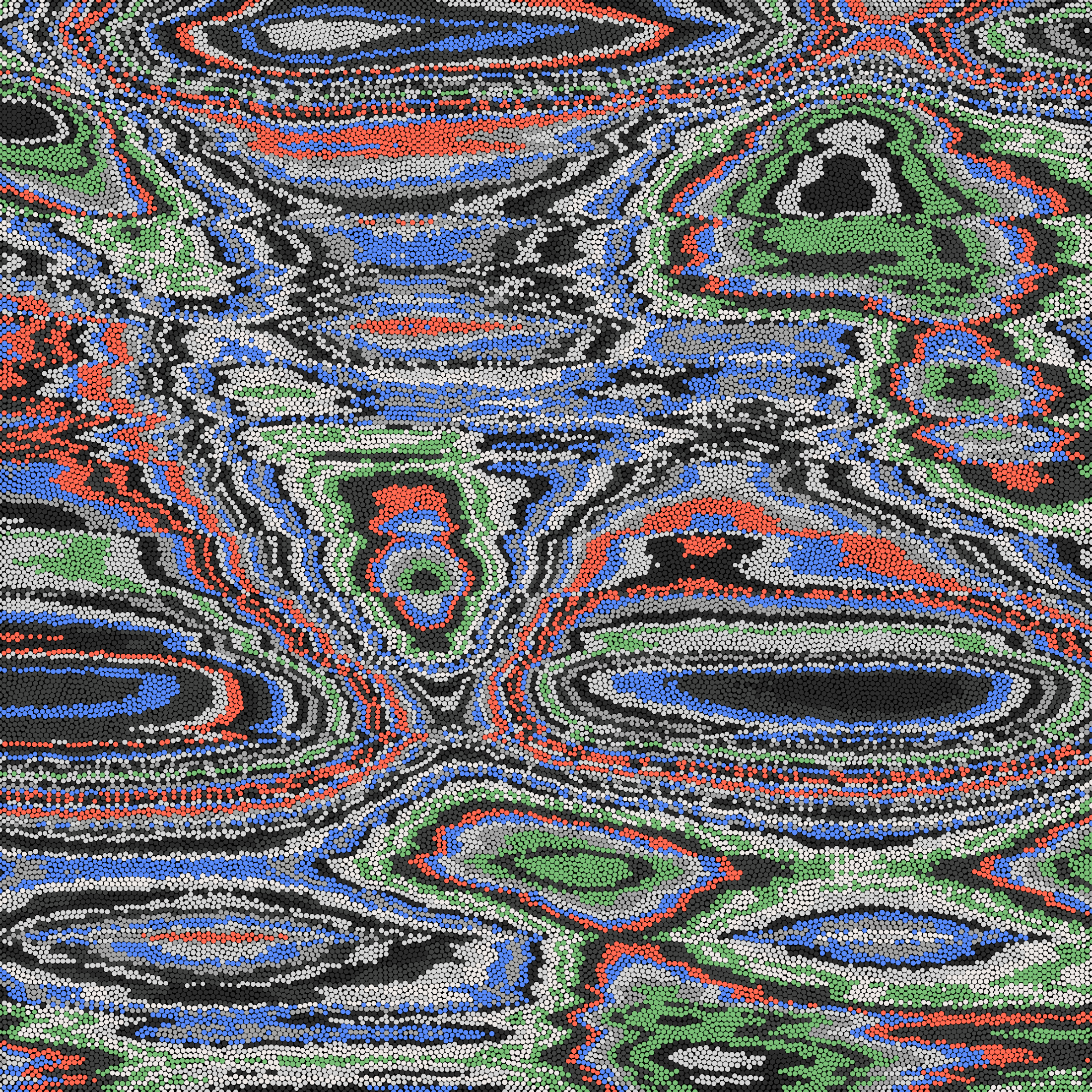
Surface Sets is where it starts: an open exploration of generative systems, run to see what they throw off. A custom process turns out a range of abstract forms, some clean, some unstable, many unexpected. Each piece catches a single moment in a system that never stops changing, where a structure holds for an instant before the noise pulls it back apart. There is no story and no symbolism here, only emerging forms and the tension between control and chance. It is the raw material everything after this tries to give a shape to.
Allowlist Eligibility
Ricky Retouch
Based in Atlanta, Ricky Retouch works with procedural systems and graphic design, primarily using Houdini to develop his visual language. His practice is rooted in a self‑taught exploration of typography and motion design, shaped by the shifting nature of online image culture. Retouch constructs systems in which images emerge gradually through variation and adjustment. Large numbers of possible outcomes are refined through selection, guided by balance, repetition, and open space — though certain works are retained for the way they resist these tendencies altogether. Point fields, grids, and layered gradients recur throughout the work. Across both static and generative formats, distortion and spatial drift unsettle the digital image, producing compositions that balance graphic order with density and restraint.
Works Available
All 100 works remain viewable and collectable on Verse, with full provenance and trading history. For press and private enquiries, contact the curator directly.